
Why Tool Holder Selection Matters
Tool holder selection is a critical part of machining performance. Even when the cutting tool itself is correct, poor clamping quality or excessive runout can reduce tool life, damage surface finish, and create instability during cutting. A reliable holder helps transfer spindle power accurately while maintaining concentricity and rigidity.
In production environments, selecting the right holder is not only a technical decision but also an operational one. It affects repeatability, setup time, maintenance, and the ability to hold tolerance consistently across batches.
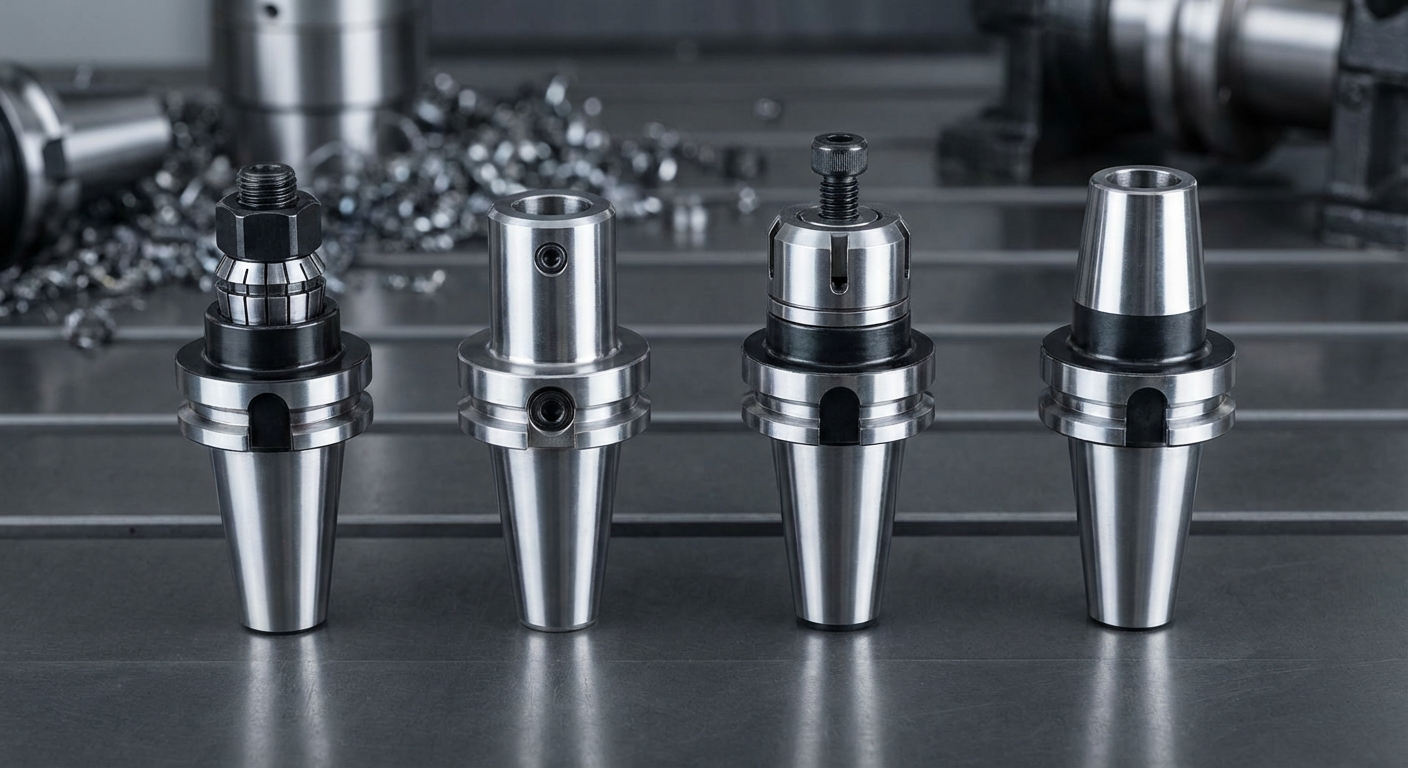
ER Collet Holders
ER collet holders are widely used because they are flexible and practical for many tool shank sizes. They are a common choice in general machining and job shop environments.
- Main advantage: Versatile and easy to use with multiple tool diameters
- Typical application: General milling, drilling, and light to medium cutting operations
- Limitation: Runout control depends on collet quality, nut condition, and assembly accuracy
- Best fit: Shops that require flexibility and efficient tool change management
ER systems are often preferred when a practical balance is needed between cost, availability, and usability. However, they are not always the best solution for very high-speed or ultra-precision applications.
Side Lock Holders
Side lock holders, also called Weldon holders, are commonly used for roughing and applications where strong torque transmission is important. They mechanically secure the tool shank with a set screw.
- Main advantage: Strong grip for heavy cutting and roughing work
- Typical application: Rough milling, heavy material removal, and stable industrial setups
- Limitation: Runout is usually higher than more precise holder systems
- Best fit: Applications prioritizing holding force over fine concentricity
Side lock holders are often selected for reliability in demanding cuts, but they may not be the ideal choice for finishing operations where surface quality and tight tolerance are critical.
Hydraulic Holders
Hydraulic holders use internal pressure to clamp the tool shank with high concentricity. They are valued in applications that require better finish, reduced vibration, and repeatable precision.
- Main advantage: Good runout control and vibration damping
- Typical application: Finishing, reaming, precision milling, and tools sensitive to vibration
- Limitation: Higher cost than general-purpose holder systems
- Best fit: Work requiring improved surface finish and controlled accuracy
Because hydraulic holders reduce vibration effectively, they can improve performance in long-reach or more delicate cutting conditions. They are often used where stable and repeatable quality matters more than minimum upfront cost.
Shrink Fit Holders
Shrink fit holders clamp the tool by heating the holder and inserting the shank before cooling. This creates a very rigid and highly concentric connection between holder and tool.
- Main advantage: Excellent concentricity, rigidity, and slim profile
- Typical application: High-speed machining, precision milling, and tight-access work
- Limitation: Requires heating equipment and controlled handling procedures
- Best fit: Advanced production environments focused on high precision and repeatability
Shrink fit systems are often used in operations where holder profile, balance, and rigidity must all be optimized. They require more process discipline, but the performance benefits can be significant.
How to Choose the Right Holder
- For general-purpose flexibility: ER collet holders are often the most practical option
- For heavy roughing and torque transmission: Side lock holders remain a reliable choice
- For reduced vibration and better finish: Hydraulic holders are often preferred
- For high precision and high-speed work: Shrink fit holders are usually the strongest option
The correct selection depends on machining goals, spindle capability, tolerance requirements, operator workflow, and budget. In many factories, using one holder type for every process creates unnecessary compromise.
Procurement and Standardization Considerations
From a procurement and tooling management perspective, standardization helps reduce confusion and improve repeatability. Many manufacturers benefit from assigning holder types by operation category, such as roughing, finishing, or precision boring, instead of selecting holders case by case without a defined structure.
Stock availability, maintenance discipline, and holder inspection are also important. A damaged or worn holder can affect cutting performance even when the tool and machine are otherwise correct.
Conclusion
Tool holders are not only accessories. They are functional components that influence accuracy, stability, finish, and tool life. ER collet, side lock, hydraulic, and shrink fit holders each serve different machining priorities. Matching the holder to the actual application helps improve performance and reduces avoidable production issues.