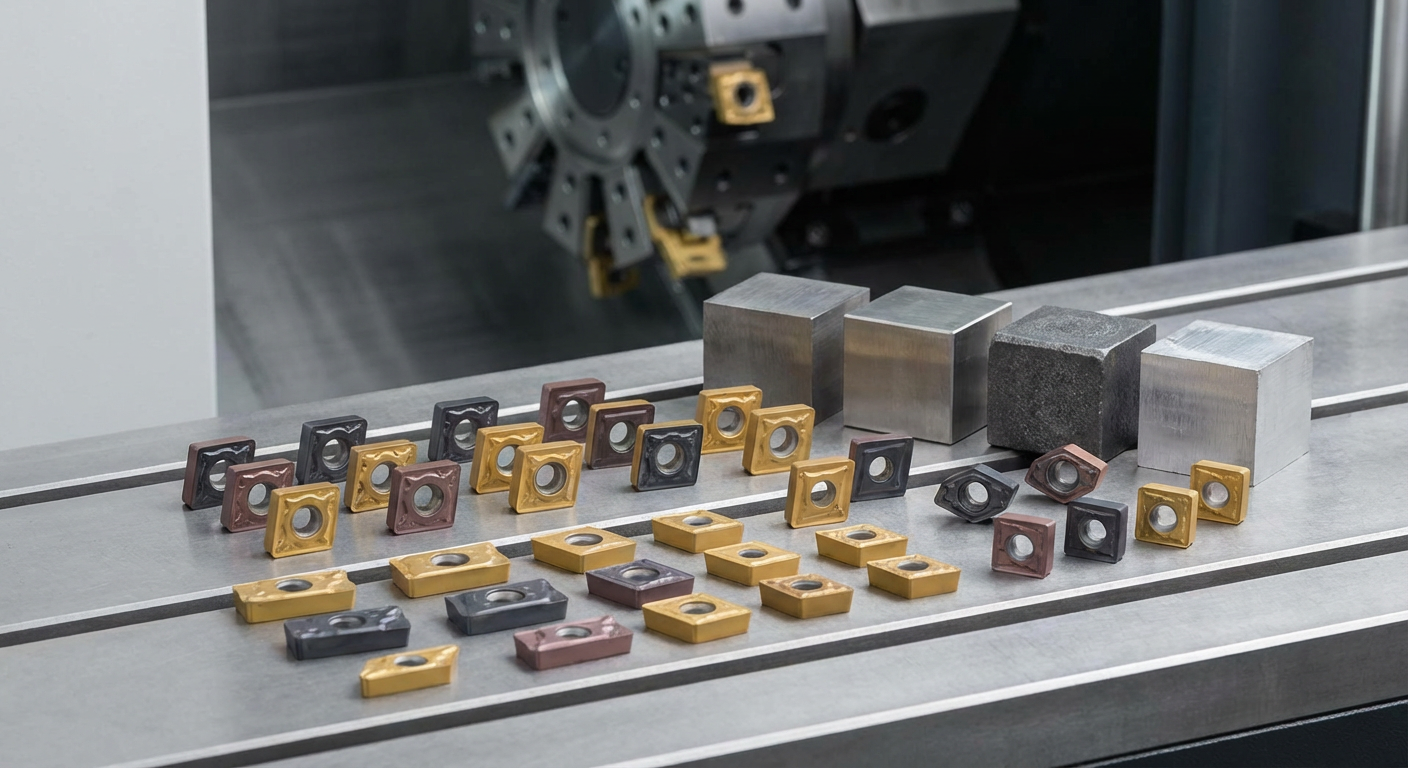

Introduction to Cutting Tools
Cutting tools are essential components in machining processes used to remove material from a workpiece in order to produce a desired shape, size, or surface finish. These tools are commonly used in manufacturing environments such as CNC machining centers, lathes, milling machines, and drilling equipment.
By applying controlled force and motion between the cutting tool and the workpiece, material is removed in the form of chips. Proper selection of cutting tools directly affects machining efficiency, tool life, dimensional accuracy, and overall production quality.
How Cutting Tools Work
During machining operations, a cutting tool engages with the workpiece under specific cutting parameters including cutting speed, feed rate, and depth of cut. The tool's sharp cutting edge penetrates the material and separates it into chips while the machine controls the relative movement between tool and workpiece.
Efficient chip removal and heat management are important factors in maintaining stable cutting conditions. Proper tool geometry and coating technologies help reduce friction and extend tool life during high-speed or heavy-duty machining.
Common Types of Cutting Tools
Milling Tools
Milling cutters are used to machine flat surfaces, slots, contours, and complex geometries. These tools typically contain multiple cutting edges and rotate at high speeds while the workpiece is fed into the cutter.
Drilling Tools
Drill bits are designed to create cylindrical holes in a workpiece. They are widely used in both manual and CNC machining operations and vary in geometry depending on the material being machined.
Turning Tools
Turning tools are commonly used on lathes where the workpiece rotates while the cutting tool moves linearly to remove material and produce cylindrical shapes.
Threading Tools
Thread cutting tools are used to create internal or external threads. These tools must maintain precise geometry to ensure correct thread pitch and fit.
Reaming and Boring Tools
Reamers and boring tools are used to refine hole dimensions and improve surface finish after drilling operations.
Materials Used in Cutting Tools
Cutting tools are manufactured from materials that provide high hardness, wear resistance, and thermal stability. The most commonly used tool materials include:
- High Speed Steel (HSS) – Known for its toughness and ability to withstand intermittent cutting.
- Cemented Carbide – Provides high hardness and wear resistance suitable for high-speed machining.
- Ceramic Tools – Used for high-temperature machining and hard materials.
- CBN and PCD – Advanced materials used for machining hardened steels and non-ferrous materials.
Importance in Industrial Manufacturing
Cutting tools play a critical role in modern manufacturing industries such as automotive production, aerospace engineering, mold and die manufacturing, and precision engineering.
Proper tool selection and management can significantly improve productivity, reduce machine downtime, and ensure consistent product quality in high-volume production environments.