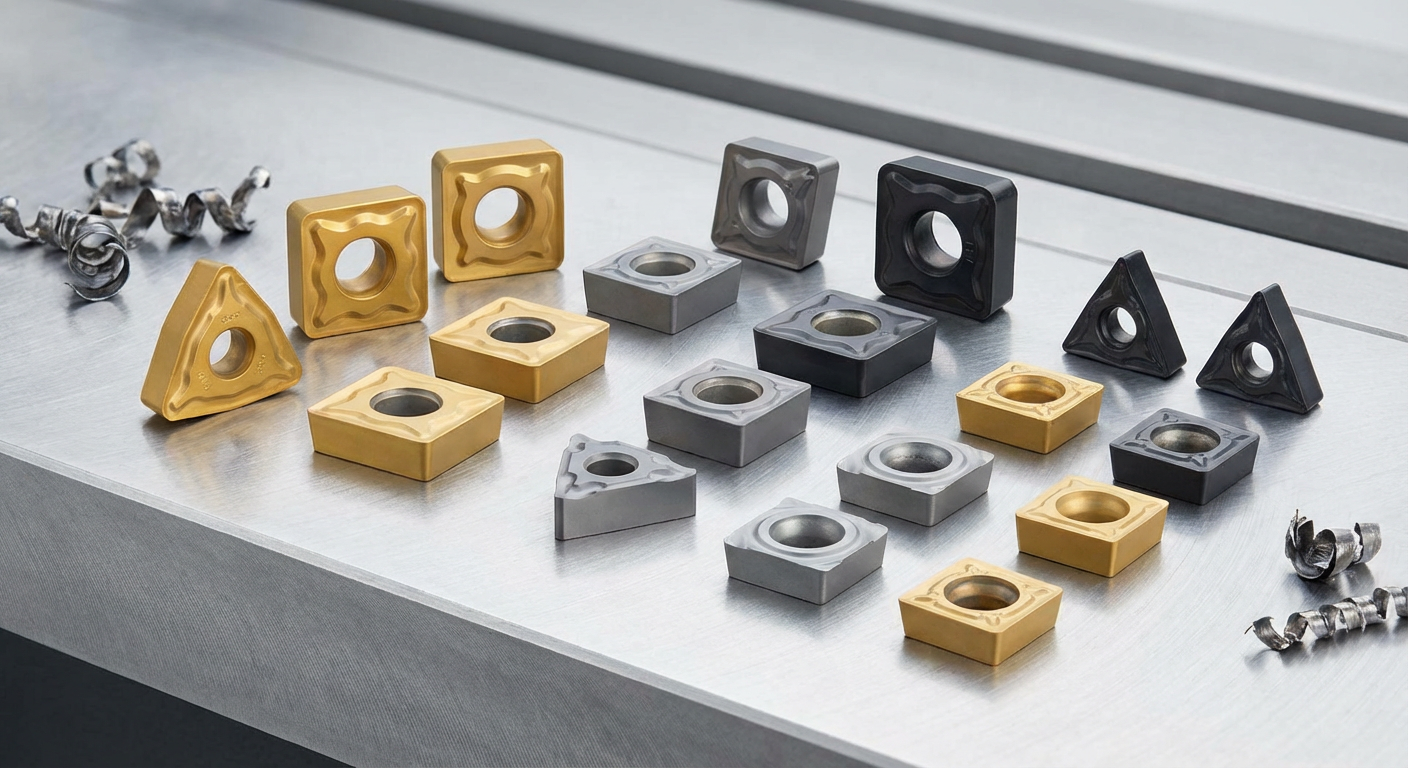
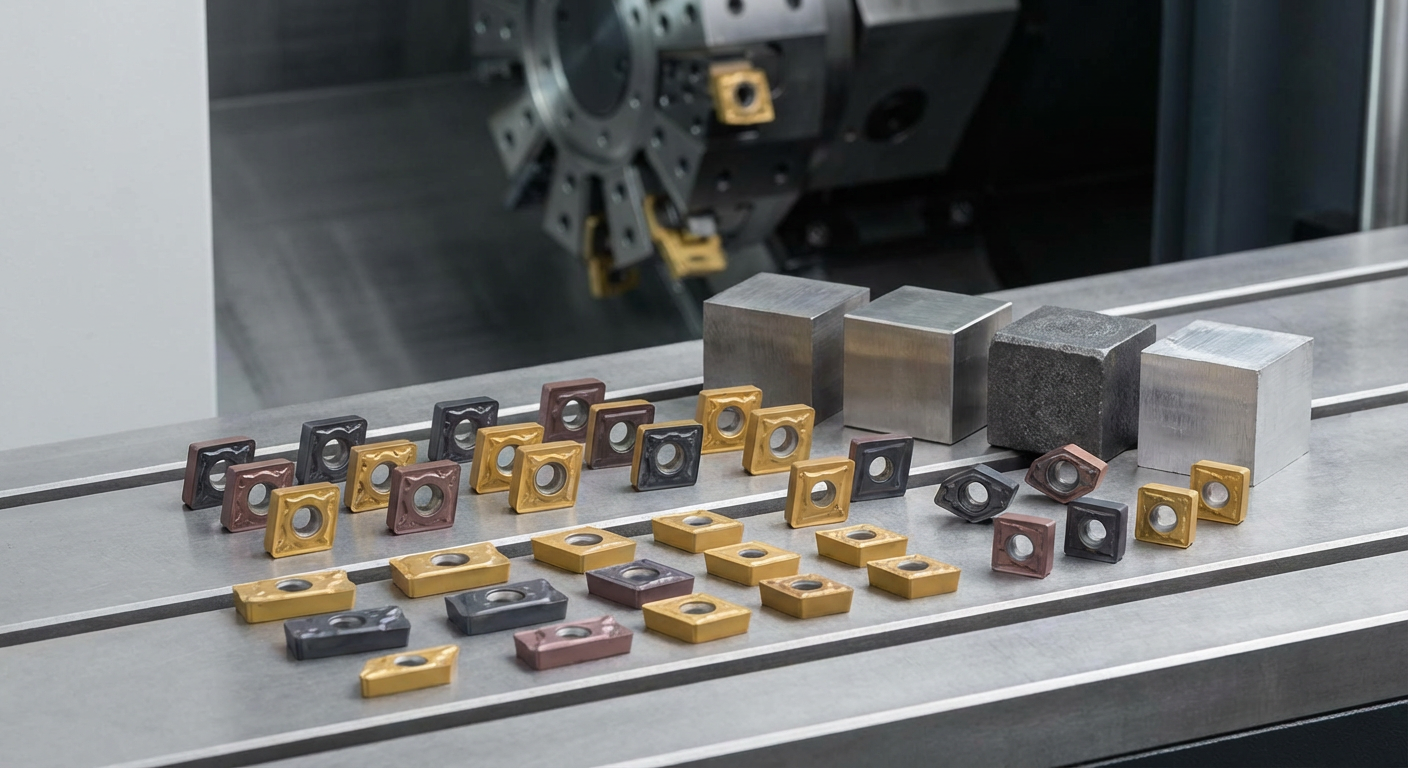
Selecting the correct insert grade is a critical factor in optimizing machining efficiency, achieving superior surface finishes, and controlling production costs. This guide breaks down the selection process based on the ISO workpiece material classification system.
1. Understanding the ISO Material Groups
To select the right grade, you must first identify which material group your workpiece falls under. Each group has unique characteristics that affect tool wear:
- ISO P (Steel): Includes carbon steel and alloy steel. Requires grades with high thermal and mechanical shock resistance.
- ISO M (Stainless Steel): Prone to work hardening and built-up edge (BUE). Requires sharp geometries and PVD coatings for toughness.
- ISO K (Cast Iron): Highly abrasive but produces short chips. Requires grades with high wear resistance (often thick CVD coatings).
- ISO N (Non-Ferrous): Aluminum, copper, and plastics. High affinity for tool materials; requires uncoated or DLC-coated inserts with polished surfaces.
- ISO S (Heat-Resistant Superalloys): Titanium and nickel-based alloys. Generates extreme heat; requires high hot-hardness and notch wear resistance.
- ISO H (Hardened Steel): Hardness between 45-65 HRC. Requires ceramic or CBN grades for precision finishing.
2. Substrate and Coating Considerations
The "Grade" of an insert is a combination of its base substrate and its coating:
CVD (Chemical Vapor Deposition)
Typically thicker coatings used for high-speed machining where heat resistance is paramount. Best for ISO P, K, and M groups in stable conditions.
PVD (Physical Vapor Deposition)
Thinner and tougher coatings. PVD is ideal for sharp edges, interrupted cuts, and materials that tend to stick to the tool, such as stainless steel or high-temp alloys.
3. Balancing Toughness and Wear Resistance
Choosing a grade is often a trade-off. A harder grade provides better wear resistance (longer life at high speeds) but is more brittle. A tougher grade offers impact resistance (best for interrupted cuts or unstable setups) but wears out faster at high temperatures.
Machining Condition Recommended Grade Priority Continuous, Stable Cut Harder, Wear-Resistant Grade Interrupted, Unstable Cut Tougher, Shock-Resistant GradeConclusion
Successful machining starts with matching the insert grade to the specific material and cutting environment. By understanding the ISO classifications and the strengths of CVD vs. PVD coatings, you can maximize tool life and reduce downtime in your CNC operations.